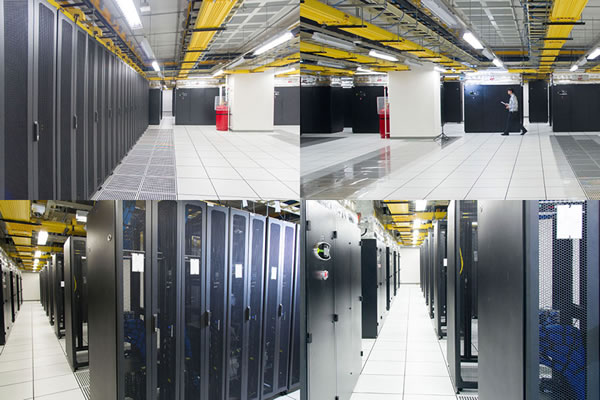
1. what hardware parameters are most critical when choosing a native server in singapore?
the primary considerations when choosing a native server are cpu , memory , storage , and network interfaces. for computing-intensive applications, priority should be given to processors with high clock speeds and multi-cores; for database and cache services, memory capacity and memory bandwidth are more important; for large files or high io scenarios, choose enterprise-class nvme ssd or sas hard drives, and pay attention to the iops indicator.
cpu and memory
when choosing, pay attention to the processor generation and cache size, and give priority to the recent generation of xeon or epyc series. it is recommended to use ecc for memory and reserve at least 20%-30% free space to avoid memory bottlenecks during peak traffic times.
storage types and redundancy
nvme ssd is suitable for high io and low latency scenarios; sata/sas is suitable for capacity-based backup. if high availability is required, consider raid or multi-machine synchronization solutions instead of relying solely on single-disk redundancy.
interfaces and extensions
pay attention to the network card (1gb/10gb/25gb/40gb) and whether it supports sr-iov and pcie expansion slots for subsequent upgrades.
2. how to determine the network and bandwidth to ensure cost-effectiveness?
deployed in singapore, network quality determines user experience, especially low latency and stable throughput. priority will be given to computer rooms with local backbone direct connection , multi-exit bgp and ddos protection. select the bandwidth billing (based on traffic) or peak billing (based on bandwidth package) policy as needed, and decide based on the business traffic characteristics.
delay and return
if you are targeting users in southeast asia or china, choosing a data center with good connectivity with major operators can reduce backhaul latency; use cdn or dedicated line optimization if necessary.
bandwidth billing model
for short-term peak traffic, it is more suitable to charge according to the peak value, while for long-term stable and large traffic, it is more economical to charge according to the flow rate. when comparing providers, convert monthly peak and average peak traffic into unit bandwidth costs.
ddos and network stability
check whether the vendor offers basic or optional ddos protection, as well as network sla (packet loss, jitter and availability) terms.
3. which server models are considered cost-effective in the singapore market?
in singapore, common cost-effective models are divided into general-purpose, computing, storage and memory types. mid-to-high-end configurations equipped with modern xeon e/scalable or epyc 7002/7003 are generally recommended; for computing models, high-frequency models are preferred; for storage models, choose large-capacity sas or hybrid nvme+hdd solutions; for memory models, choose large-capacity ecc memory and high-speed memory channels.
general recommended model
for example, dual-channel or single-channel servers based on intel xeon silver/gold or amd epyc 7002/7003 are suitable for most web and application server scenarios, taking into account both cost and performance.
compute and memory optimized models
computing models can choose high-frequency xeon w or some high-frequency epyc skus; memory models are recommended to choose models that support more dimm slots and larger single memory.
cloud alternatives and hybrid deployments
if your business requires elasticity, consider mixing native servers with public cloud instances, placing long-term stable loads on physical machines, and placing fluctuating loads on the cloud to improve overall cost performance.
4. how to choose the right supplier and what to check?
when choosing a supplier, you should focus on the location of the computer room, network interconnection, after-sales response, sla, price transparency, and whether it supports customized hardware. priority is given to service providers with local operation experience and the ability to provide rapid hardware replacement and on-site maintenance.
after-sales and technical support
confirm the work order response time, on-site maintenance time (rma), whether it supports remote console (kvm/ipmi) and hardware warranty coverage.
tariff and contract flexibility
compare monthly payment, annual payment and prepaid discounts, and pay attention to hidden fees (such as bandwidth overage fees, traffic calculation caliber, migration fees, etc.).
reputation and compliance
check customer reviews, industry cases and compliance with data compliance requirements (such as the personal data protection act (pdpa)) to reduce subsequent legal and reputational risks.
5. how to further improve cost performance through configuration and procurement strategies?
to improve cost performance, you can start with hardware selection, procurement cycle, redundancy strategy, and operation and maintenance automation. reasonably match specifications and business needs to avoid over-provisioning; use long-term contracts or bulk purchases to obtain discounts; reduce deployment and maintenance costs through containerization and automation.
scale on demand and align to specifications
use a configuration slightly lower than the peak at the beginning to speed up the monitoring and elastic expansion mechanism and avoid one-time high investment. use load forecasting tools to optimize the pace of expansion.
purchase agreements and negotiation skills
negotiate for bandwidth discounts, free migration windows, priority hardware replacement, and transparent billing. compare prices with multiple vendors and request written slas for comparison.
operation and maintenance and cost amortization
reduce manual operation and maintenance costs through automated operation and maintenance, mixed use of containers/virtual machines, and monitoring and alarming, allocate hardware depreciation and operation and maintenance costs to service units, and calculate the true tco (total cost of ownership).
- Latest articles
- Enterprise Migration To Google Cloud Hong Kong Native IP Performance Reliability And Cost Analysis
- Singapore Cn2 Direct Connection Comparison With Traditional Links Summary Of Test Results And Deployment Recommendations
- Comprehensive Analysis Of Reliability And Hidden Costs Of Hong Kong Vps 10 Yuan Ultra-low Price Package
- Combine CDN And Load Balancing To Choose Which Singapore Server Is Better To Use To Achieve High Availability Architecture
- Operation And Maintenance Practice Of Three Networks Cn2 Malaysia Link Fault Rapid Location And Recovery Method
- Japanese Station Group Server Recommendations Focus On Delay Stability Node Selection Suggestions
- How To Operate The Korean Purchasing Agent Group’s Operation Process, From Group Regulation To Transaction Closed-loop Optimization
- How To Purchase Taiwanese Native IP Phone Cards In Bulk And Manage Inventory With An Enterprise-level Solution
- How To Get Free Unlimited Traffic Hong Kong Cn2 Real Use Experience Report
- Recommended Network Diagnostic Tools To Help You Locate The Root Cause Of Problems On The World Of Warcraft Taiwan Server
- Popular tags
-

Interpretation Of Maintenance Announcements And Clarification Of Common Misunderstandings During Lol Mobile Game Singapore Server Maintenance
this article explains the announcement of "lol mobile game singapore server under maintenance" one by one, and clarifies common misunderstandings among players, including practical information and operational suggestions such as reasons for maintenance, estimated duration, recharge and compensation, cross-region switching and vpn risks. -

How To Conduct A Free Test Of Singapore Ip Server Ip
this article will introduce how to conduct a free test of a singapore ip server to help users understand its performance and security. -

Analysis Of Functions And Application Scenarios Of Singapore’s Largest Server
this article analyzes the functions and application scenarios of singapore's largest server, discusses its importance in various industries, and recommends related services provided by dexun telecommunications.